
Combustible Dust Awareness
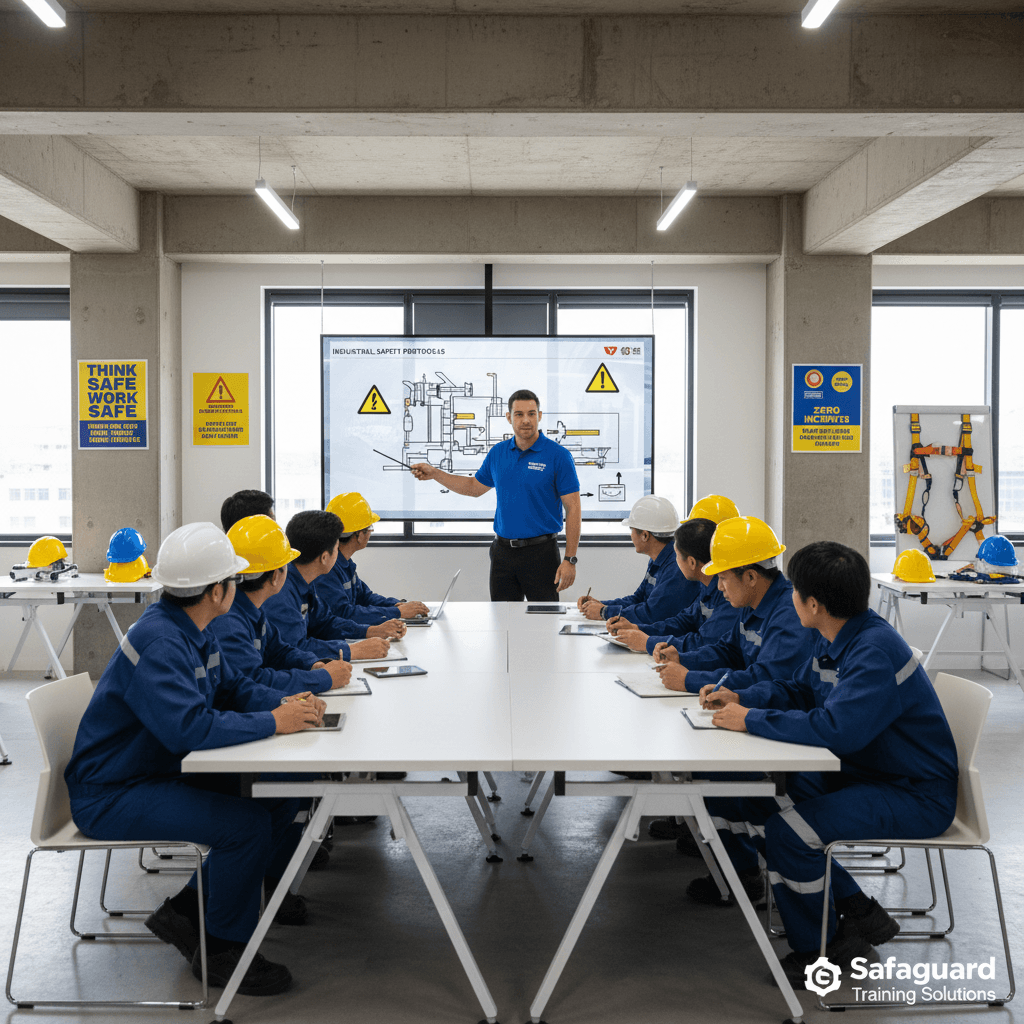
A half-day awareness session on what combustible dust is, why it explodes, and how to recognise the conditions in your facility. Classroom-based with real incident case studies.
About This Service
Overview
Combustible dust explosions are among the most devastating industrial incidents, yet many facilities remain unaware of the risks present in their own operations. Materials as common as flour, sugar, wood dust, metal powders, and pharmaceutical ingredients can create explosive atmospheres under the right conditions.
This half-day awareness course gives your team the foundation they need: what combustible dust is, where it shows up, why it explodes, and what the regulatory and control framework looks like at a high level. Real incident case studies — Imperial Sugar, CTA Acoustics, West Pharmaceutical — ground the concepts in what actually happens on the floor.
What this course is not: this is awareness training, not a Dust Hazard Analysis (DHA) and not engineering design. We cover what controls exist and the role each plays — we don't teach you to specify, design, or install them. If you need a DHA delivered for your facility, that is a separate engineering service we offer under our DHA practice.
Format: half day (4 contact hours), classroom-based, no specialist equipment or prior knowledge required. Available in-house at your premises, as a public workshop, or as a private session for your organisation.
Capabilities
Key Features
What Is Combustible Dust
The dust explosion pentagon — fuel, oxygen, ignition, dispersion, and confinement — and how ordinary materials become explosion hazards.
Common Dust Sources in Industry
Where combustible dust shows up — food processing, pharmaceuticals, woodworking, metalworking, chemicals, grain handling, and beyond.
Regulatory Framework Overview
A working overview of Singapore Standard SS 667, NFPA 660 (the consolidated dust standard), and ATEX directives — what they require and why.
Engineering Controls — Simplified
What engineering controls exist (dust collection, explosion venting, suppression, isolation, bonding and grounding) and the role each plays. Awareness, not design.
Administrative Controls — Touchpoints
The basics — housekeeping standards, dust accumulation limits, hot work permits, and the role of training and inspection in keeping risk low.
Real Incident Case Studies
Imperial Sugar, CTA Acoustics, West Pharmaceutical and others — what went wrong, what was missed, and what the lessons mean for your facility.
Next Step: Dust Hazard Analysis (DHA)
Where awareness ends and engineering work begins. We outline what a DHA is, when it's required, and how it fits into a full dust safety programme.
Sectors
Industries We Serve
Upcoming Runs
No runs currently scheduled for this course — get in touch to arrange a session.
Get in touch to schedule a session for your team or to be notified when the next public workshop opens.
Interested in Combustible Dust Awareness?
Contact our team to learn how we can help with your specific requirements.